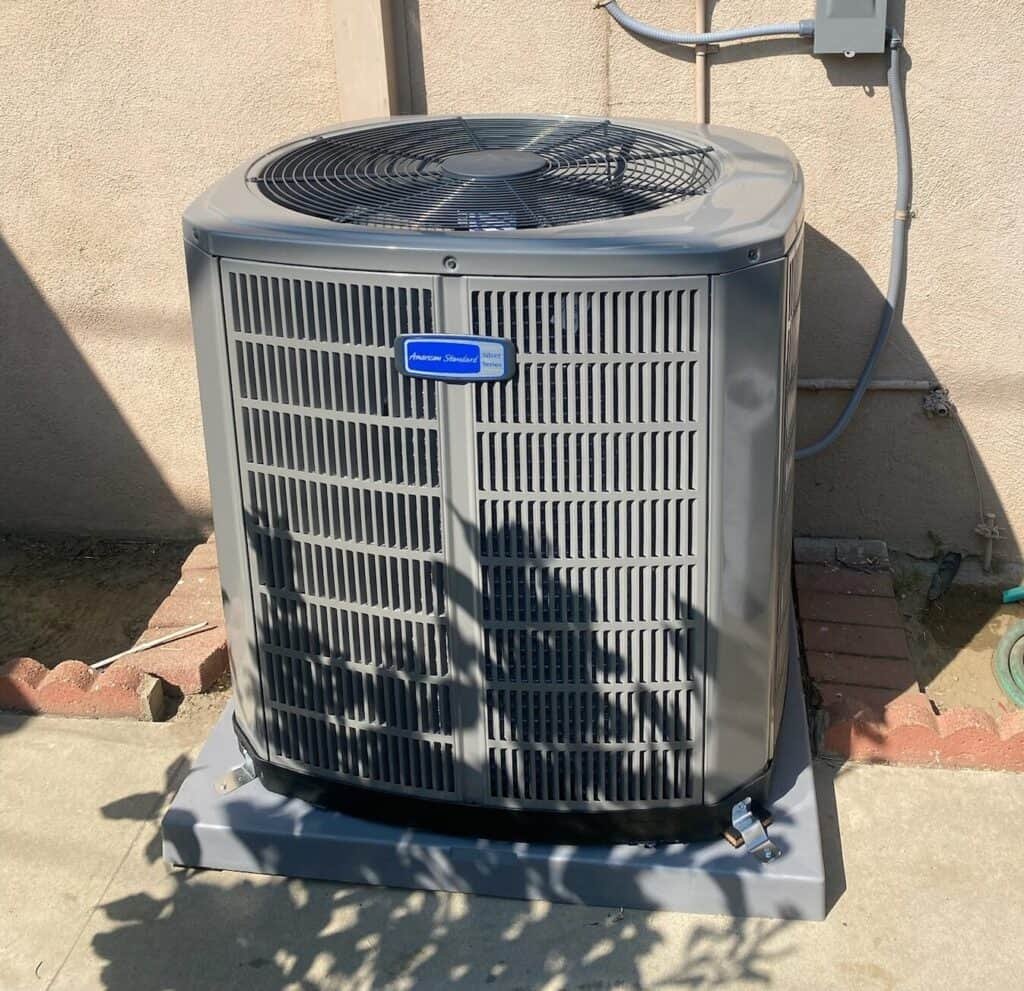
Most Southern California homeowners assume the hard part of summer ends in August. In Los Angeles and Ventura counties, it often does not. September and October regularly deliver the hottest single days of the year inland, and they arrive right as the first Santa Ana winds show up. That combination is why our phone rings hardest in early fall, and why an air conditioner that coasted through July can quit in October.
Here is what actually changes in these two months, what tends to break, and what is worth doing before the next heat spike.
Late-season heat is harder on your system than mid-summer heat
By late September your air conditioner has been running for four to five months straight. Bearings have worn, capacitors have been through thousands of start cycles, refrigerant charge issues that were marginal in June have had all summer to get worse, and the coil has collected a season of dust. A system that is 90 percent healthy in June can be 70 percent healthy by late September.
Then the inland valleys throw their hottest days of the year at it. Woodland Hills, Chatsworth, Northridge, Simi Valley and Santa Clarita routinely see triple digits well into October. The system is at its weakest exactly when demand peaks. Failures that would have been a slow decline in spring become a hard shutdown in fall.
What Santa Ana winds do to an air conditioner
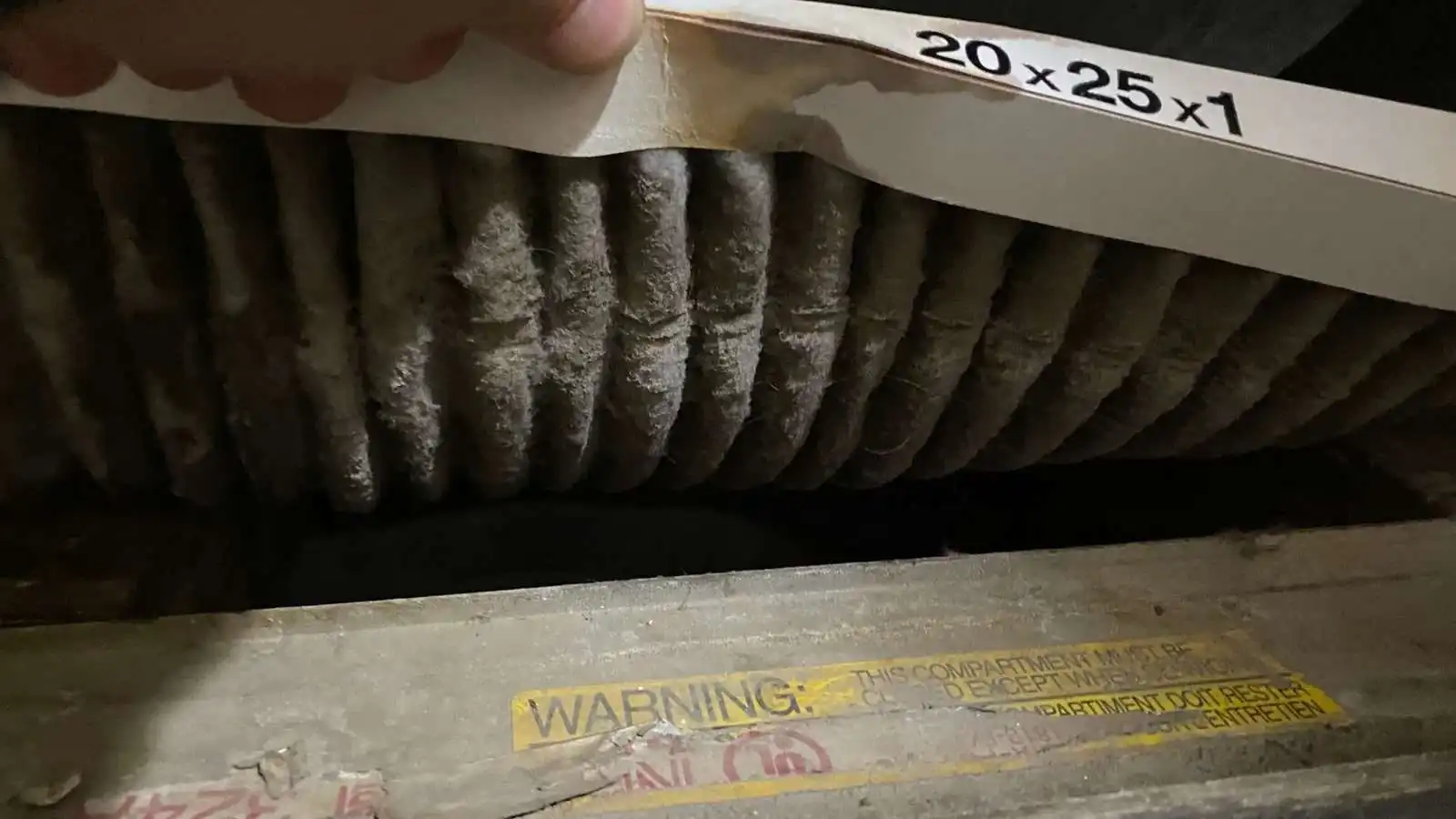
Santa Ana winds begin in fall and continue through winter. They push hot, extremely dry air from the interior toward the coast, and they carry a great deal of dust and debris. For your equipment that means three things at once.
- The outdoor coil loads up fast. Wind drives dust, pollen and ash straight into the condenser fins. A blocked coil cannot reject heat, so head pressure climbs and the compressor works far harder than it should.
- Humidity drops sharply. Very dry air changes how the system behaves and makes dust airborne that would otherwise settle, which loads your filter faster than normal.
- Temperature swings widen. A 100-degree afternoon can fall to the 50s overnight. Homes that were purely cooling may need heat the same week, and a furnace that has sat unused since spring gets asked to start on short notice.
If you live in a wind corridor such as the Santa Clarita Valley, the Conejo Valley, or the canyon communities around Malibu and Calabasas, expect your filter and outdoor coil to need attention noticeably more often during these months.
The five failures we see most in early fall
AC not keeping up?
Same-day diagnostic when available across Los Angeles and Ventura County. The $85 diagnostic is applied toward your repair.
Licensed and insured, CSLB #1135270. Serving Los Angeles and Ventura counties.
1. Failed run capacitor
The most common single cause of a no-cool call. A capacitor gives the compressor and fan motor the jolt they need to start. Heat degrades them, and after a full summer of triple-digit afternoons many give out on the next hot day. The symptom is usually an outdoor unit that hums but will not start, or a fan that needs a push to spin.
2. Dirty condenser coil
Wind-driven debris packed into the fins. The system still runs, so most people do not notice, but capacity drops and the compressor runs hot. Left alone through a fall heat wave, this is one of the ways a compressor dies early.
3. Low refrigerant from a small leak
Slow leaks hide all summer. As the charge drops the system cools less and less, and the first sign for most homeowners is that the house simply will not get below the low 80s on a hot afternoon. This is worth taking seriously now rather than next season, because refrigerant has become significantly more expensive as the industry transitions to newer low-GWP refrigerants such as R-454B.
4. Clogged condensate drain
A summer of condensation leaves algae and sludge in the drain line. When it blocks, the safety switch shuts the system down, or worse, water backs up into a ceiling or closet. Often discovered as a stain rather than as a cooling problem.
5. The furnace that will not light on the first cold night
This is the fall-specific one. After sitting unused since spring, ignitors fail, flame sensors are dirty, and pilot assemblies do not cooperate. It almost always happens on the first genuinely cold evening, which is also when every HVAC company in the area is booked.
What is worth doing before the next heat spike
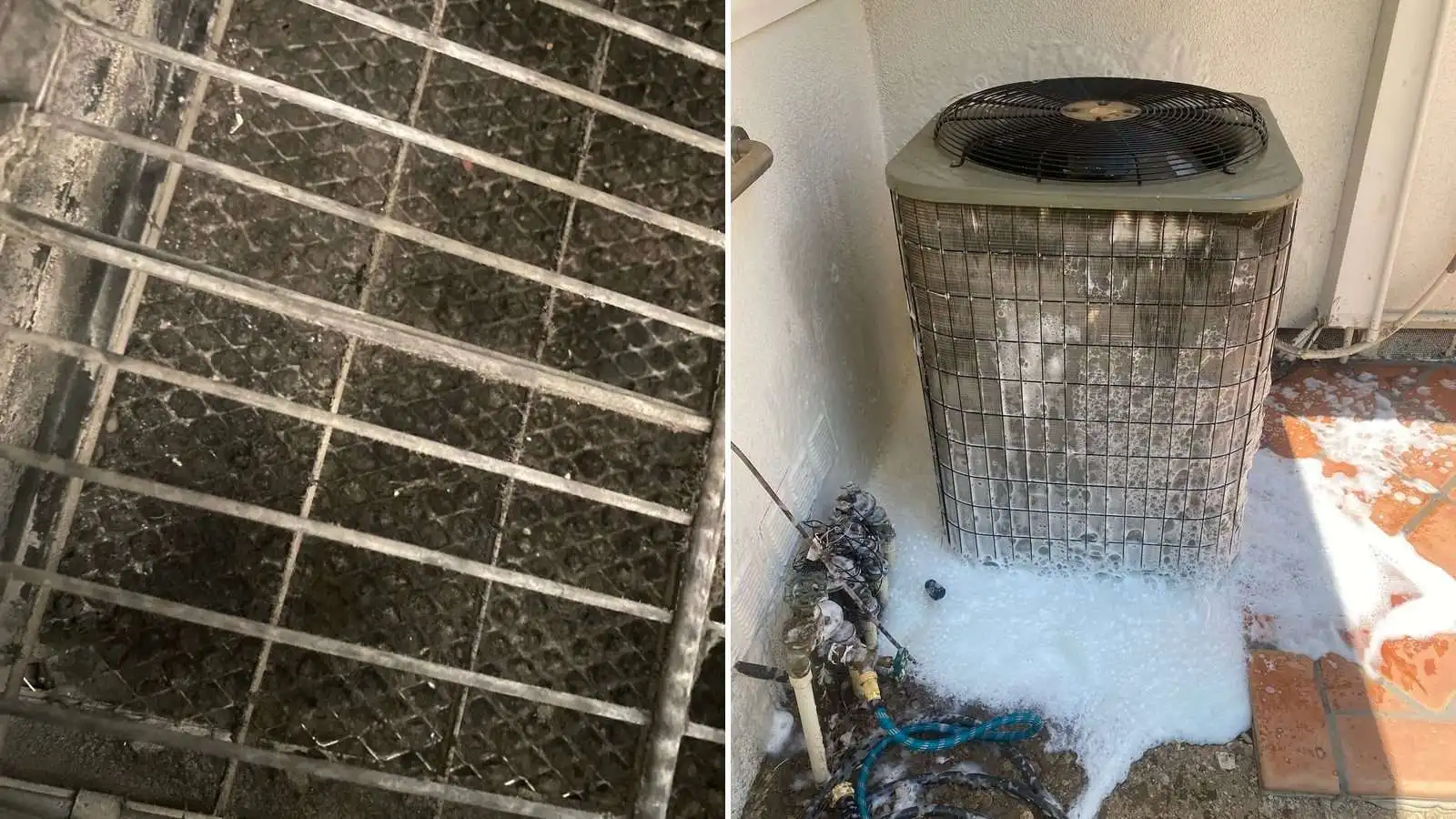
- Rinse the outdoor coil. With the power off at the disconnect, spray the fins from the inside out with a garden hose. No pressure washer, and never bend the fins. This one task recovers more lost capacity than anything else a homeowner can do.
- Change the filter now, and again in a month. During Santa Ana season, filters load far faster than the box suggests.
- Clear three feet around the condenser. Summer growth, patio furniture and stacked items all choke airflow.
- Run the heat for ten minutes on a cool evening. Do it deliberately, while it is still optional. Finding out the furnace will not light in September is inconvenient. Finding out in December at 10pm is not.
- Listen at startup. A hum without a start, a screech, or a hard electrical click are all worth a call before they become a failure.
When to call instead of waiting
Some things can wait for a scheduled visit. Some should not. Call promptly if the outdoor unit hums but will not start, if the breaker trips more than once, if you smell anything burning, if there is ice on the refrigerant lines, or if the house is not dropping below the low 80s on a hot day.
We offer emergency HVAC repair across Los Angeles and Ventura counties with same-day service when available, and an 85 dollar diagnostic that is applied toward the repair. For anything that is not urgent, a scheduled AC repair visit or a maintenance plan is the cheaper path, because catching a weak capacitor in September costs a fraction of replacing a compressor in October.
Straight answers
Is it too late in the year to bother servicing my AC?
No. In this region September and October frequently bring the hottest days of the year, and service now also catches the heating problems you would otherwise meet in December.
Why does my AC struggle only in the late afternoon?
Capacity falls as outdoor temperature rises, and afternoon is when the coil is hottest and the house has absorbed the most heat. A system that is marginal will show it then first. It usually points to a dirty coil, low charge, or a system that is undersized for the load.
Do Santa Ana winds actually damage HVAC equipment?
Not directly, but the dust and debris they carry clog coils and filters quickly, and that added strain shortens equipment life. During wind events, checking your filter and coil more often is genuinely worth the effort.
Should I repair or replace an older system this fall?
It depends on age, the specific failure and refrigerant type. Systems using R-22 or aging R-410A equipment are getting more expensive to service as refrigerant costs rise. If your system is past 12 to 15 years and facing a major repair, it is worth pricing both. We will give you the honest comparison rather than only quoting a replacement.
Serving Los Angeles and Ventura counties
Reliable Heating and Air is a licensed and insured HVAC contractor, CSLB number 1135270, serving homes across both counties. We handle AC repair in Thousand Oaks, Simi Valley, Camarillo, Oxnard and surrounding communities. See every area we cover on our service areas page, or call (747) 222-6259.