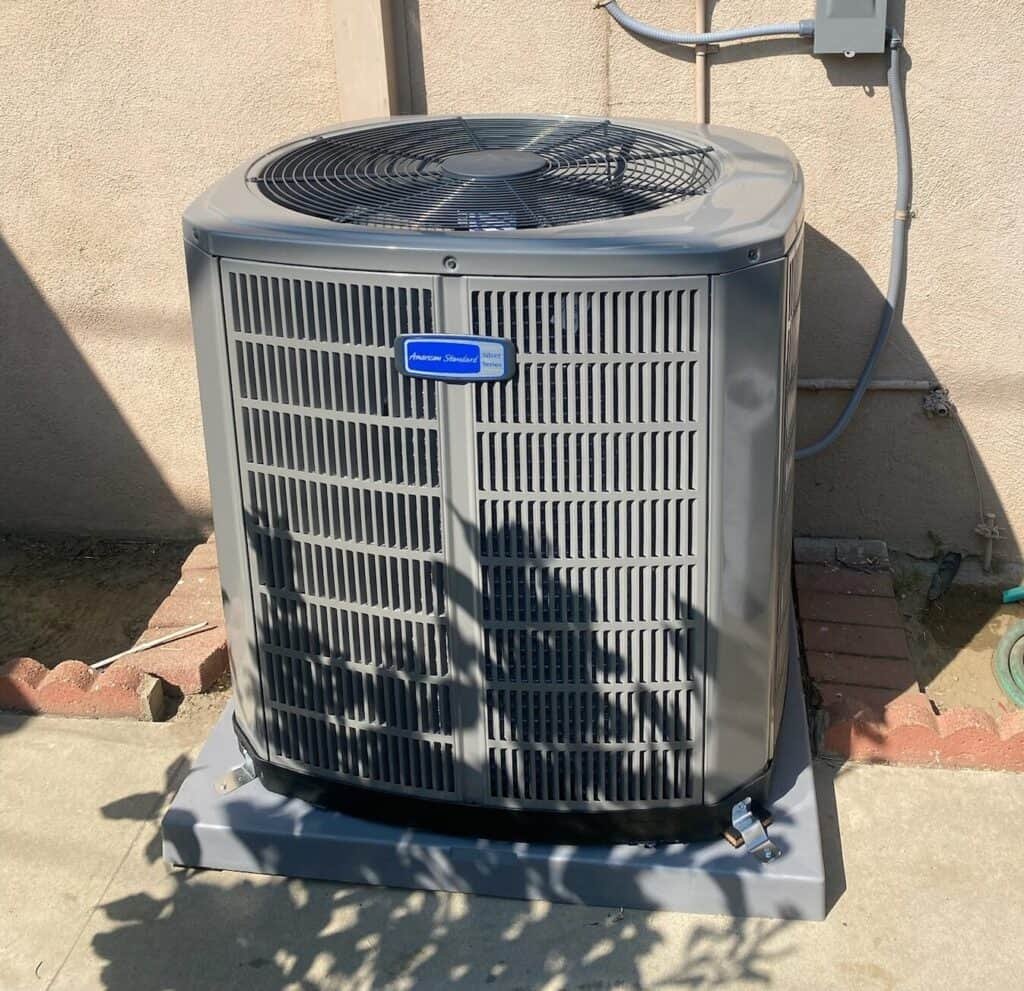
Refrigerant Leak Detection & Repair in Los Angeles & Ventura County
If your AC is low on refrigerant, it has a leak. Refrigerant is not fuel and it does not get used up. We find the leak, show you where it is, and tell you honestly whether repairing it is the right call.
“Topping it off” is not a repair
This is the most common thing we get called out to undo. A system runs low, someone adds refrigerant, it cools again for a few weeks or a season, and then it is low again — because the refrigerant went out through a hole that nobody looked for.
Recharging a leaking system without finding the leak means paying for refrigerant repeatedly, releasing it into the atmosphere, and running a compressor in a condition that shortens its life. As of 2026 it is also getting expensive in a way it has never been before, for reasons covered below.
We will still add refrigerant when it is the sensible short-term move and you have decided to replace the system soon. We will tell you that is what we are doing, rather than presenting it as a fix.
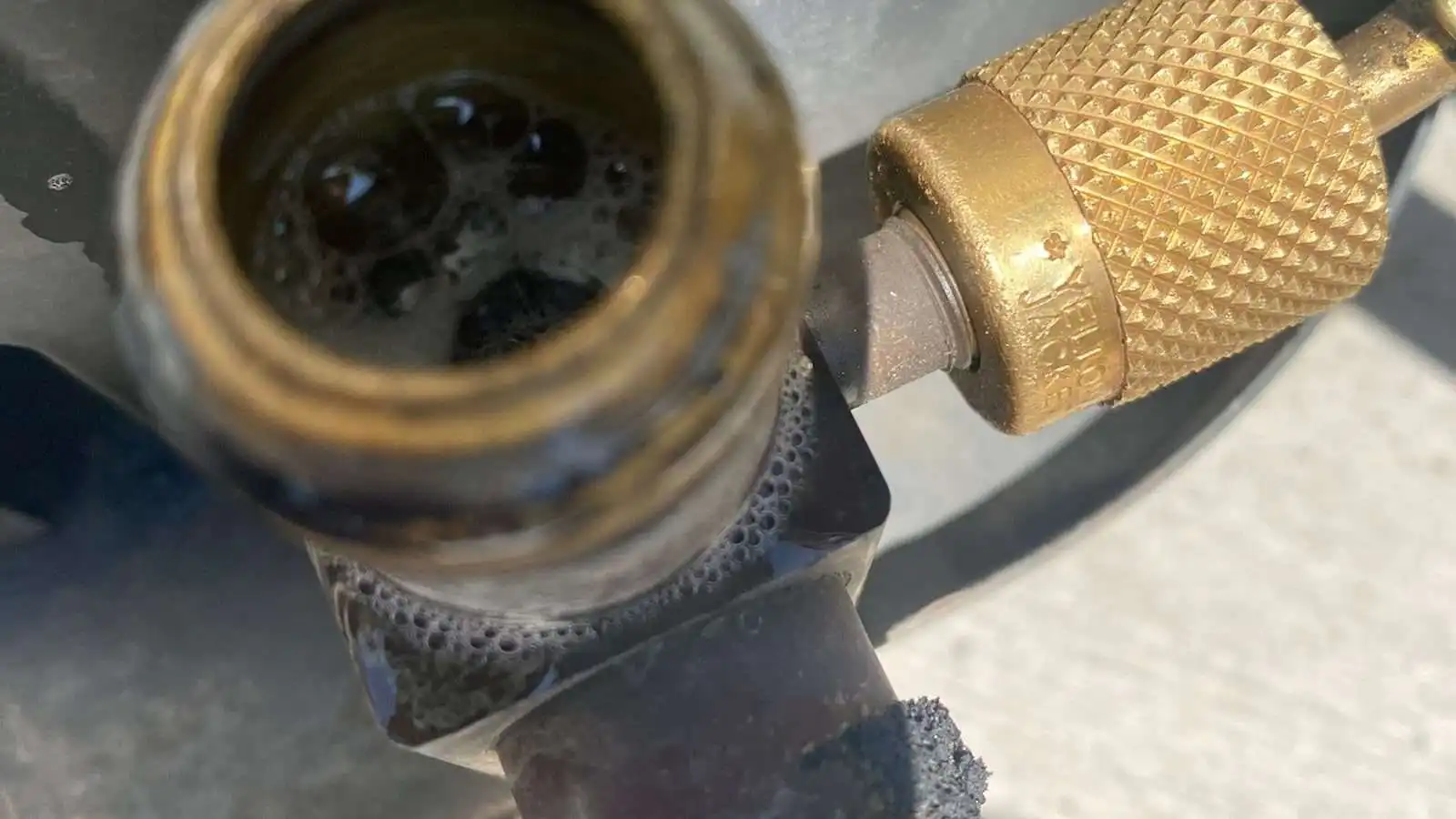
Signs you probably have a leak
- The system runs constantly and the house still will not reach the thermostat setting on a hot afternoon
- Air from the vents is cool but not cold, particularly late in the day
- Ice on the refrigerant line or on the indoor coil — a classic low-charge symptom, and a reason to shut the system off rather than keep running it
- A hissing or bubbling sound near the indoor unit
- Cooling that got noticeably worse across one season rather than failing all at once
- An electric bill that climbed without a change in how you use the system
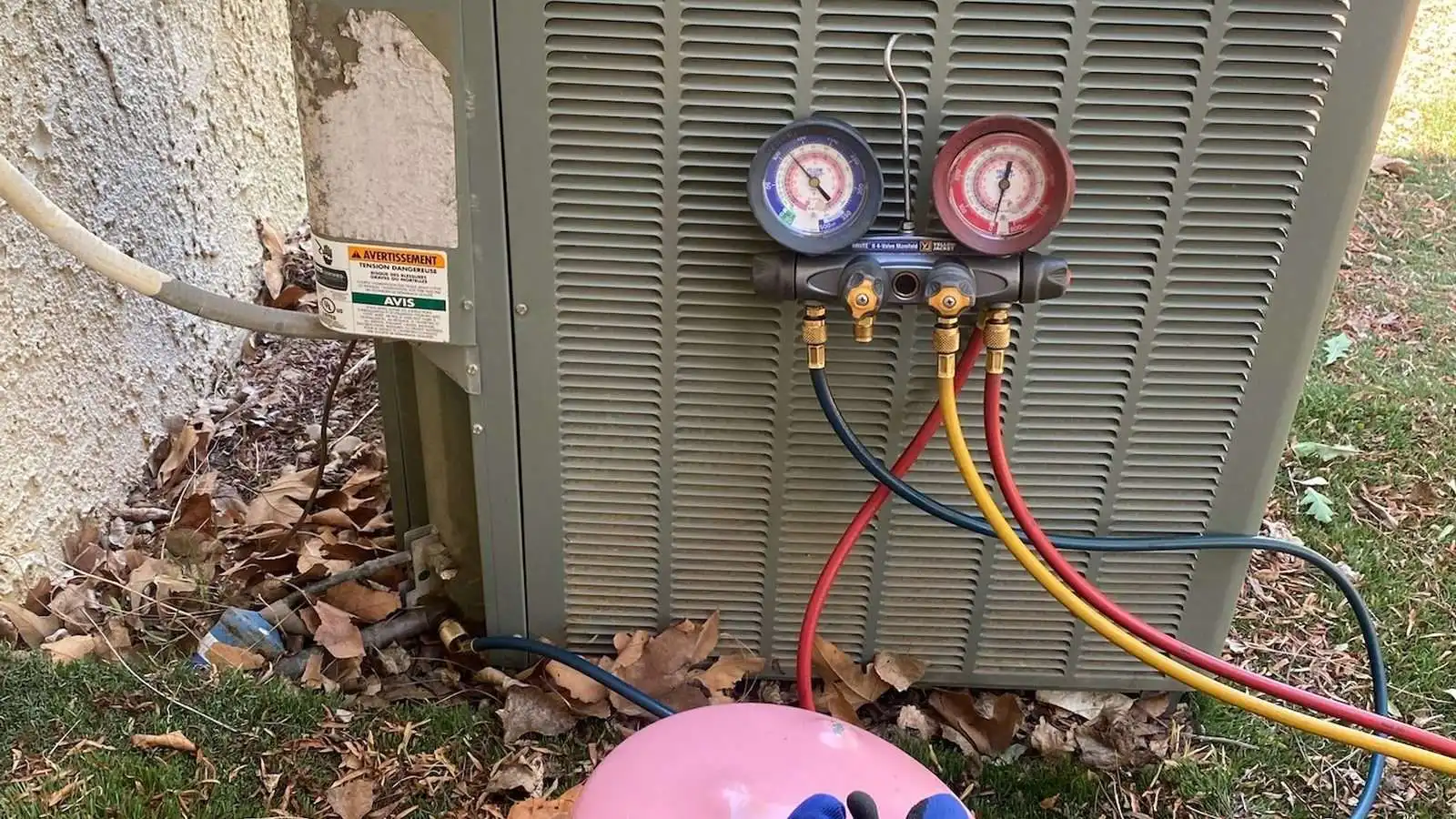
How we actually find it
Leak detection is the part that separates a real repair from a guess. Depending on the system and where the leak is likely to be, we use some combination of:
- Electronic leak detection. A calibrated detector swept along the coil, fittings, service valves and line set.
- UV dye. Dye introduced into the system, then a return visit under UV light to find slow leaks that a detector will not catch in one pass.
- Nitrogen pressure testing. The system is isolated and pressurized with dry nitrogen to locate a leak that only opens under pressure.
- Bubble testing. Straightforward and still the fastest confirmation on accessible fittings and braze joints.
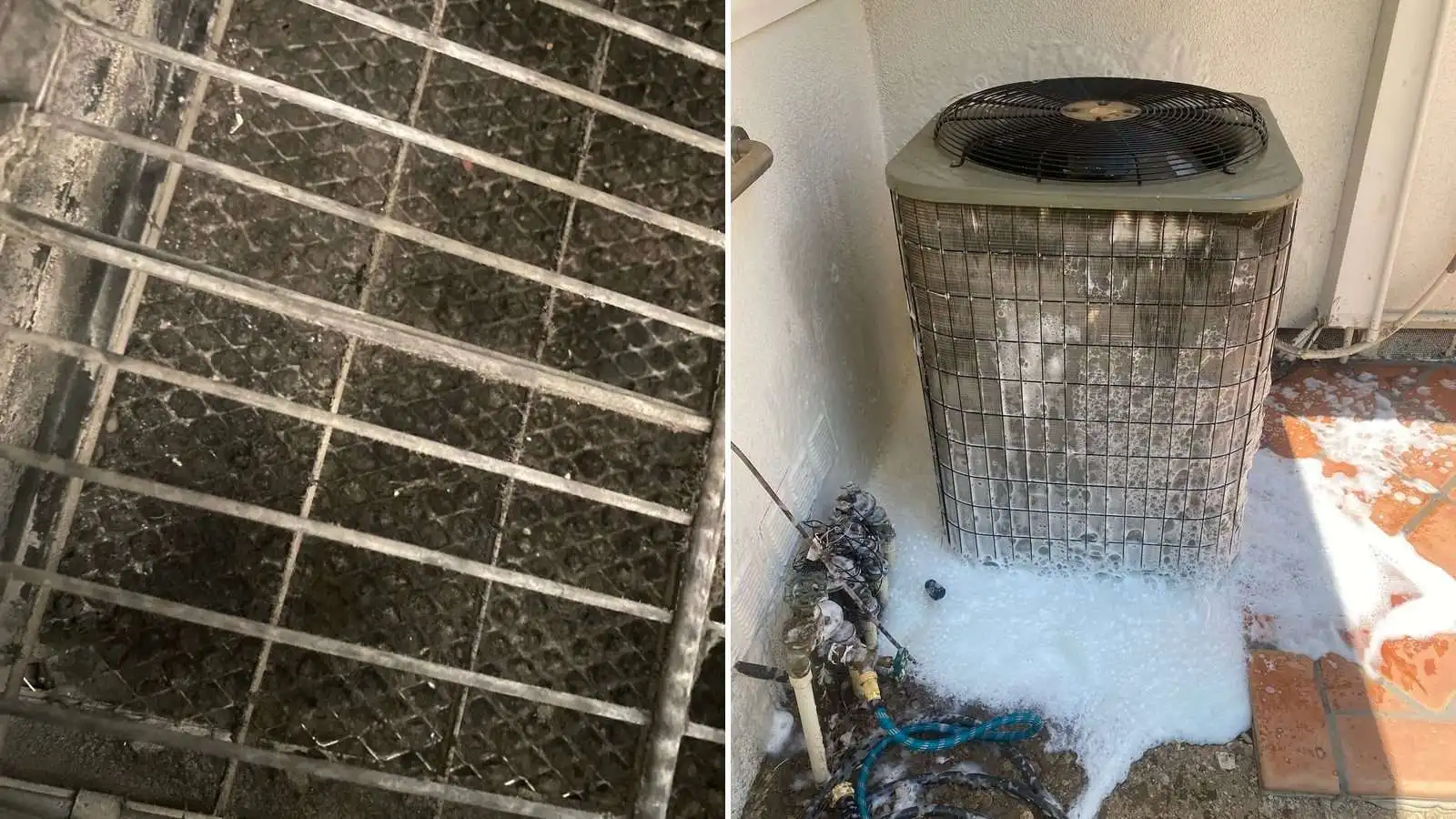
Common failure points on Los Angeles and Ventura County systems are the evaporator coil, the braze joints at the line set, the service valve cores, and corrosion on condenser coils in coastal homes. Salt air in Oxnard, Ventura and Port Hueneme is hard on outdoor coils in a way that inland homes never see.
What the 2026 refrigerant changes mean for your system
This is the part worth understanding before you decide between repairing and replacing, because the rules changed and they change the math.
If your system uses R-410A
R-410A is what most systems installed between roughly 2010 and 2024 use. It is being phased down, not switched off. The practical points:
- New systems are no longer manufactured with R-410A. Manufacturers moved to lower-GWP refrigerants for new equipment.
- The EPA finalized a rule effective July 27, 2026 allowing continued installation of R-410A units that were manufactured or imported before January 1, 2025, until that remaining inventory runs out.
- Production of R-410A itself steps down over time, reaching roughly 15% of current levels by 2036.
- California adds its own layer. Under SB 1206, bulk refrigerants above a 1,500 GWP threshold — which includes R-410A — may no longer be sold in California from January 1, 2030. Servicing existing systems after that point relies on reclaimed refrigerant rather than new supply.
None of this means your working R-410A system needs replacing today. It does mean that a system with a serious leak and a lot of years on it is a different decision in 2026 than it was in 2020, because the refrigerant it depends on is on a schedule.
If you are buying a new system
New residential equipment now uses lower-GWP refrigerants such as R-454B. These are classified A2L, or mildly flammable, which changes some installation and service requirements but is not a reason for concern in a properly installed system. Equipment, tooling and leak detection for A2L systems are all standard now.
For a fuller breakdown of equipment costs and what drives them, see our guide to AC installation costs in Los Angeles and Ventura County.
Repair or replace
An honest version of a question most contractors answer in whichever direction pays better. Repairing the leak usually makes sense when:
- The leak is accessible — a fitting, a valve core, a braze joint on the line set
- The system is under roughly ten years old and has otherwise been reliable
- The compressor is healthy and the system has not been run low on charge for a long stretch
Replacement usually makes more sense when:
- The leak is in the evaporator coil on an older system, where the coil is a significant portion of the cost of the whole unit
- There are multiple leaks, or the coil shows widespread corrosion
- The system has already been recharged more than once
- The unit is old enough that you would be investing in a system that depends on a refrigerant California stops selling new in 2030
We give you the findings and the options in writing. You decide. If replacement is the direction, our AC installation and heat pump installation pages cover what that involves.
Frequently asked questions
Freon is a brand name that became a generic term. When people say a system needs a Freon recharge they usually mean R-22 in older systems or R-410A in newer ones. R-22 has not been produced or imported since 2020, so any R-22 system still running is on reclaimed supply and is generally a replacement candidate.
It should not. A sealed system that loses charge annually has a leak that has not been found. If a contractor has recharged your system more than once without a leak search, that is worth a second opinion.
Often, when the leak is accessible and it is a fitting, valve or line-set joint. Coil replacements depend on parts availability. Same-day service when available.
Our diagnostic is $85 and it is applied toward the repair when you proceed with us. You get the findings in writing either way.
Across Los Angeles and Ventura County, including Moorpark, Simi Valley, Thousand Oaks, Camarillo, Oxnard, Ventura, Woodland Hills, Chatsworth, Northridge, Calabasas, Agoura Hills and Westlake Village. See every city we service.
Get the leak found properly
We locate it, show you what we found, and give you the options in writing before anything is repaired.