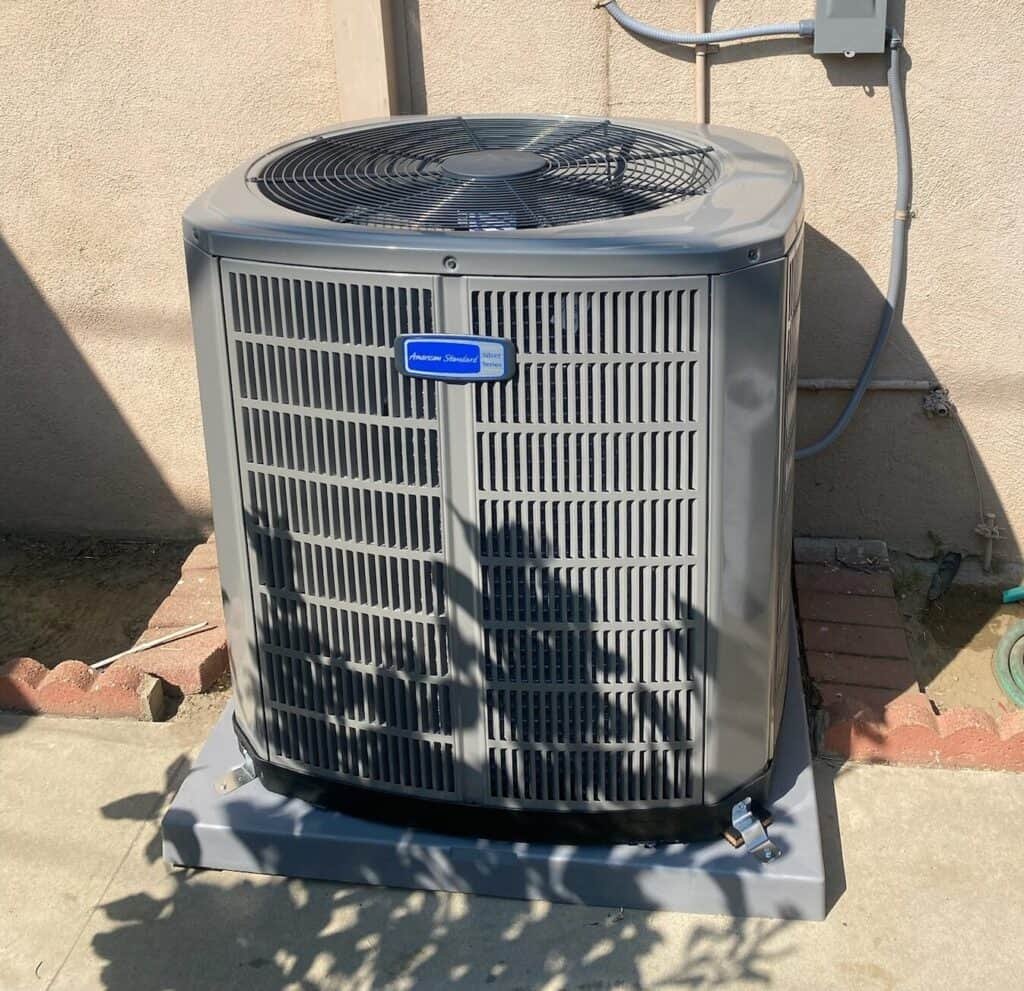
Furnace maintenance is a once-a-year inspection, cleaning and safety check of your heating system, and the best time for it is fall, before the first cold night. ENERGY STAR’s maintenance checklist recommends a heating check-up every fall for exactly that reason.
In Los Angeles and Ventura County, the reasons are a little different from what national guides describe. Our winters are mild, so a furnace here rarely wears out from hard use. What catches homeowners off guard is the opposite: a burner section that has sat cold since spring, a blower and filter that worked all summer moving air for the AC, and equipment tucked into an attic, garage or closet where nobody looks at it until it stops working.
This guide comes from Reliable Heating and Air, a Southern California HVAC contractor that services residential heating systems across the San Fernando Valley, Los Angeles, Ventura County and Santa Clarita. It covers what a thorough tune-up should include, what you can check yourself in about ten minutes, what the first run of the season is telling you, and how to handle a tune-up that ends with a replacement recommendation.
The short version:
- Have the furnace serviced once a year, in fall, before you start relying on the heat.
- In Southern California the risks are idle burners, a blower and filter worn by a summer of AC use, and attic or garage installs nobody inspects. Heavy winter use is rarely the problem.
- Filters, clearances, carbon monoxide alarms and a watched test run are homeowner jobs. Burners, gas pressure, venting and the heat exchanger need a technician.
Why furnace maintenance matters in Southern California
A furnace in Simi Valley or Woodland Hills runs far fewer hours than one in Denver or Chicago, so it is fair to ask whether it needs yearly attention at all. It does, for three reasons that come from how heating equipment lives here.
The burners sit idle most of the year
For most of the year the gas side of your furnace does nothing. Dust settles on the burners and the flame sensor, the ignitor has not fired in months, and any small fault left over from last winter is still there. The first cold evening tests all of it at once, and that is also the evening the phones start ringing at every HVAC company in the area.
The blower and filter worked all summer
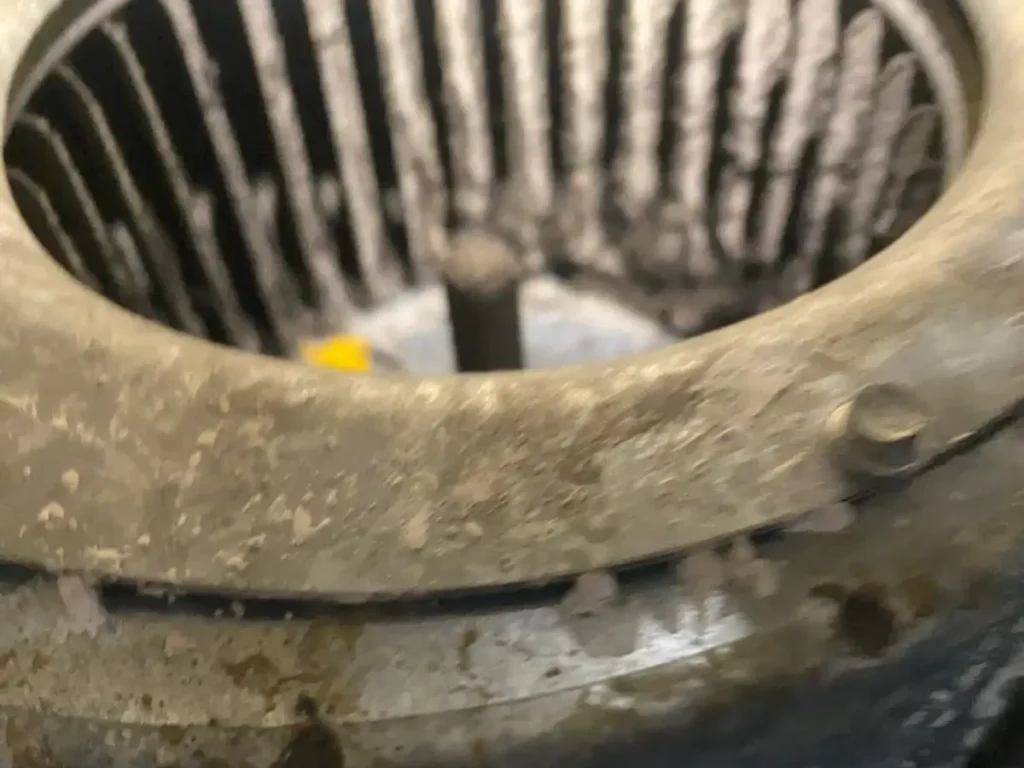
If your home has central air conditioning with a gas furnace, the furnace’s blower is what pushes the cooled air through your ducts. That means the air-moving half of the furnace may have logged more hours in July and August than it will all winter. Filters load up, dust packs onto the blower wheel, and the blower motor and its capacitor have just come through a full cooling season. A dusty Santa Ana wind week or smoke from a nearby fire loads a filter faster still.
Attic, garage and closet installs stay out of sight
Many furnaces in the San Fernando Valley and Ventura County are installed horizontally in the attic. Others live in garages, laundry rooms or hallway closets. Attic units bake through the summer and collect dust, loose insulation and sometimes rodent nesting. Garage and closet units tend to end up surrounded by storage. None of that is visible from the thermostat on the hallway wall.
What a thorough furnace tune-up should include
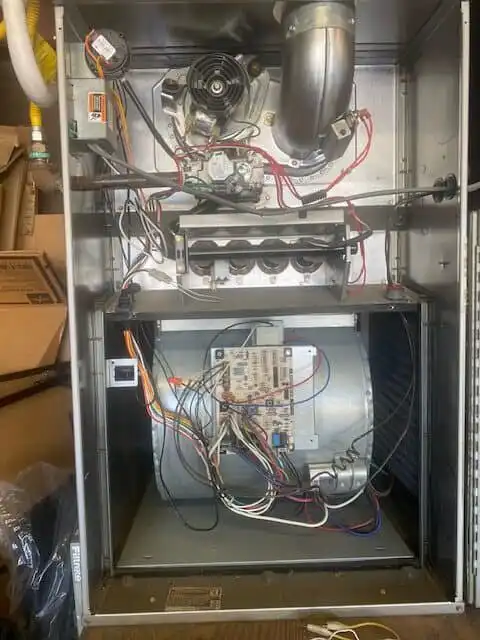
A proper furnace tune-up inspects, cleans and tests the parts that make heat, move air and keep combustion safe. ENERGY STAR’s core list for gas furnaces is checking the gas connections, gas pressure, burner combustion and heat exchanger. This is the fuller list worth expecting, and why each item matters.
| What should be checked | Why it matters |
|---|---|
| Air filter: condition, size and fit, replaced if needed. | A clogged filter is one of the simplest reasons a furnace overheats and shuts itself off. |
| Ignitor and flame sensor: ignitor inspected, flame sensor cleaned. | A dirty flame sensor is a classic reason a furnace lights, then shuts off a few seconds later. |
| Burners and flame: burners cleared of dust and debris, flame watched through a full cycle. | A lifting, rolling or yellow flame points to a combustion problem. |
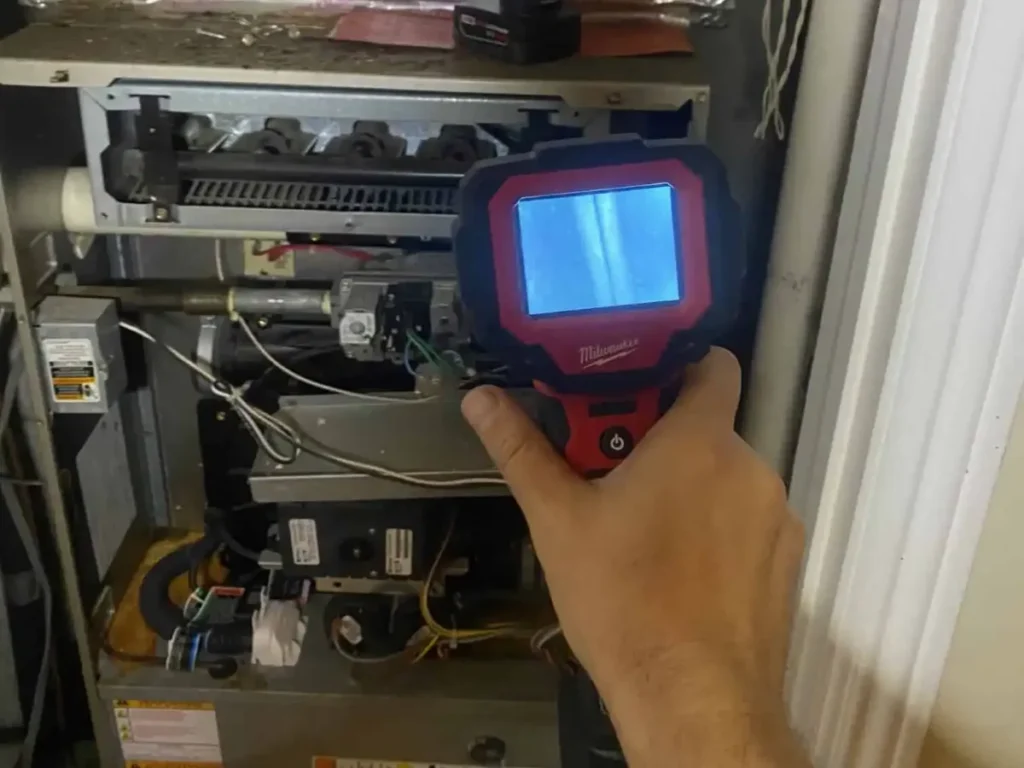
| Heat exchanger: inspected for cracks, rust and soot, often with a camera. | It is the wall between burning gas and the air you breathe. |
| Gas supply: connections checked for leaks, gas pressure measured. | Incorrect pressure affects ignition, flame quality and heat output. |
| Venting and draft inducer: flue pipe, joints and roof cap inspected, inducer motor tested. | A disconnected or blocked vent can send exhaust back into the house. Flue joints in an attic deserve a close look. |
| Safety switches: high-limit, rollout and pressure switches tested. | These shut the furnace down when something is wrong. They should never be bypassed. |
| Blower: wheel inspected and cleaned if needed, motor and capacitor tested. | In homes with central AC, the blower has just finished a full summer of work. |
| Condensate drain (high-efficiency furnaces): trap, drain line and any secondary pan or overflow switch checked. | Furnaces rated around 90% efficiency and up produce water. A clog can shut the furnace off or leak into the ceiling below an attic unit. |
| Controls: wiring and control board checked, stored fault codes read, thermostat tested through a full heating cycle. | Fault codes often reveal a problem that has been building since last winter. |
| Temperature rise: the difference between return and supply air, compared with the range on the furnace’s rating plate. | It shows whether airflow and heat output are where the manufacturer intended. |
| Carbon monoxide: CO checked around the furnace and in the supply air. | An elevated reading is a reason to stop and find out why before the furnace runs again. |
Is a furnace tune-up worth it if you barely use the heat?
Usually, yes, but not for the reason most national articles give. In a mild climate the energy you save from a tuned-up furnace is modest. The value here is safety and reliability.
- Safety. A gas furnace burns fuel inside your home, and a cracked heat exchanger, a loose vent joint or a small gas leak gives little warning. The U.S. Consumer Product Safety Commission recommends carbon monoxide alarms on every level of the home and outside sleeping areas. California law has required CO alarms in single-family homes with a gas appliance, fireplace or attached garage since 2011, and in other dwellings since 2013.
- Reliability. Ignition and flame-sensing faults surface on the first cold night. Finding one in October costs you an appointment. Finding it at 10 p.m. in December costs you a cold house and a wait.
- Summer wear. A tune-up is the one time someone looks at the blower, motor and filter right after their hardest season.
Skipping it is a bigger gamble with an older furnace, an attic installation, or any furnace that short-cycled, smelled odd or needed a reset last winter.
If you would rather not keep track of the date, Reliable’s maintenance plans put the visit on the calendar every year. Homes with central AC can pair it with a spring AC tune-up, so each half of the system is checked before its busy season.
What you can check yourself before the first cold night
None of these steps require tools or opening the burner compartment. They take about ten minutes and rule out the simple causes before you pay for a visit.
- Check the filter. Pull it out and hold it up to a light. If light barely comes through, replace it with the size printed on the frame. ENERGY STAR suggests inspecting filters monthly, and after a windy or smoky week it is worth looking sooner.
- Clear the space around the furnace. Move boxes, laundry and anything flammable away from garage and closet units, and don’t store gasoline, paint or solvents near a gas appliance. If the furnace sits behind louvered closet doors, keep the louvers clear, because many furnaces draw their combustion air from that space.
- Test your carbon monoxide alarms. Press the test button and replace the batteries if they are due.
- Set the thermostat. Fresh batteries, mode on Heat, fan on Auto, and a setpoint a few degrees above room temperature. If the screen is blank or nothing happens, the issue may be the thermostat or the power feeding it rather than the furnace itself.
- Watch a full start. A normal start runs in order: the draft inducer motor hums, the ignitor glows or clicks, the burners light, and the blower comes on after a short delay. A brief puff of cool air at first is normal. Steady warm air should follow within a few minutes.
- Expect a short dusty smell. The first run of the season burns off dust that settled on the heat exchanger and burners. Trane notes the smell should fade once that dust is gone. A smell that lingers, or one like hot plastic or wiring, is a different situation.
- Look for water. High-efficiency furnaces drain water through white plastic pipe. Water on the floor, in a drain pan, or a fresh stain on the ceiling below an attic unit means the drain needs attention.
What not to do: don’t remove burner covers, adjust the gas valve, bypass a safety switch, or keep resetting a furnace that keeps shutting down. Repeated lockouts are the furnace telling you something is wrong.
What the first run of the season is telling you
Most furnace problems show themselves in the first few minutes of the first cycle. Use this table to sort what you notice into normal, worth scheduling, or act now.
| What you notice (likely cause) | What to do |
|---|---|
| Dusty burning smell that fades Likely cause: dust burning off the heat exchanger | Normal. Let it run and open a window if needed. |
| Smell of hot plastic or wiring Likely cause: an overheating motor, wire or component | Turn the furnace off and call. |
| Clicks, lights briefly, then shuts off Likely cause: dirty flame sensor or ignition fault | Schedule a repair. Don’t keep resetting it. |
| Blows cool air for a long time Likely cause: fan set to On, failed ignition, or an overheating shutdown | Set the fan to Auto and check the filter. If it continues, call. |
| Runs a few minutes, shuts off, restarts Likely cause: overheating from restricted airflow, or a flame-sensing problem | Check the filter first, then schedule service. |
| Water around or under the furnace Likely cause: clogged condensate drain or trap | Turn it off if water is near wiring, then call. |
| Yellow, lazy flame or soot marks Likely cause: incomplete combustion | Turn it off and have it inspected before using it again. |
| Rotten-egg smell Likely cause: possible gas leak | Leave the house, then call SoCalGas at 1-800-427-2200 (or your gas utility) or 911 from outside. |
| Carbon monoxide alarm sounds Likely cause: carbon monoxide in the home | Get everyone outside to fresh air and call 911. |
Gas leak steps follow SoCalGas’s emergency instructions. Carbon monoxide steps follow the CPSC guidance linked above.
Furnace not acting right?
Schedule a furnace repair visit with Reliable Heating and Air. Same-day service is available when the schedule allows. Diagnostic fee credited toward approved repairs.
Prefer to book online? Schedule service here. If the house is cold and it can’t wait, see our urgent HVAC repair page.
If a tune-up ends with a replacement recommendation
Sometimes that is the right call. A furnace with a confirmed cracked heat exchanger, or an old one facing an expensive repair, may well be due. But tune-ups are also a common setting for high-pressure replacement pitches, so it helps to know what a solid recommendation looks like.
If you are told the heat exchanger is cracked
- Ask to see it. A real finding can usually be shown: a photo or camera image of the crack, where it is, and how it was found.
- Ask about carbon monoxide. Was CO measured, and what was the reading?
- Don’t run a furnace that has been confirmed unsafe. A second opinion is about the diagnosis, not about using a furnace that may be leaking exhaust while you decide.
- Get a second opinion before you sign. A replacement is a significant investment, and a second set of eyes on the same furnace is a reasonable step.
Repair or replace?
Age alone is not a reason to replace a furnace. Age plus a major repair usually is. Signs a furnace is near the end of its life include heating bills climbing without a change in habits, rooms that no longer heat evenly, short cycling, a yellow burner flame, and repairs that are starting to stack up.
If replacement is on the table, it is also the moment to decide whether another gas furnace or a heat pump suits your home better. Our comparison of heat pumps and furnaces for Southern California homes walks through that choice.
Been told you need a new furnace?
Get a second opinion before you make the investment. If replacement does make sense, Reliable Heating and Air offers no-cost, no-obligation furnace replacement estimates, and we pull the permit on the replacements we handle.
Have a heat pump instead of a furnace?
Not every forced-air system in Southern California has a furnace. If your outdoor unit heats as well as cools and the indoor unit has no gas line or flue pipe, you most likely have a heat pump with an air handler, and its upkeep looks different. Our heat pump maintenance guide covers what that visit should include.
Furnace maintenance FAQs
Once a year, ideally between September and November, before you start relying on the heat. If you also have central AC, a spring visit for the cooling side keeps each half of the system checked before its busy season.
About an hour for an accessible furnace in a closet or garage. Attic installs, very dusty systems and visits that turn up a repair take longer.
Cleaning is one part of a tune-up. A visit that only vacuums the cabinet and changes the filter skips the checks that matter most: gas pressure, venting, the heat exchanger and the safety switches.
Partly. Filters, clearances, thermostat batteries, carbon monoxide alarm tests and a watched test run are all homeowner jobs. Cleaning burners and flame sensors, measuring gas pressure, inspecting the heat exchanger and testing safety controls take a technician with the right instruments.
Yes. A new furnace has the same burners, flame sensor, filter and drain as an older one, and they collect dust the same way. Yearly service also gives you a record of the system’s condition from the start.
Get your furnace checked before you need it
Reliable Heating and Air is a family-owned HVAC company serving the San Fernando Valley, Los Angeles, Ventura County and Santa Clarita. Call us for a furnace tune-up, a heating repair, or a second opinion on a replacement recommendation.
Schedule service online or email reliablehvacla@gmail.com.
Licensed and insured, CSLB #1135270.